
Hodgeman County Arrest Records and Court Charges
Hodgeman County arrest records begin with law enforcement. They can involve the arresting agency, identity confirmation, booking paperwork, charge notes at intake, bond or hold information, and custody status when public. The official local channel is the Hodgeman County Sheriff and jail admin because no county-run online arrest log, mugshot database, or jail roster was located in official sources.
Court charges after arrest are different. Once the County Attorney reviews the facts, the prosecutor may file a complaint or information with the Clerk of the District Court. That filing becomes part of the court charge record and then the broader criminal case file. Booking charges may change, and prosecutor-filed counts may be amended, reduced, dismissed, or resolved by plea or trial. The full case outcome belongs in the Hodgeman County criminal court records file.
The local prosecutor is the County Attorney, not a district attorney. Hodgeman County research lists County Attorney Mark Cowell with local and Larned contact details. That office matters because arrest records do not decide final charges. Filed charges are prosecutor and court records, then the district court tracks each count through hearings, docket events, disposition, and sentence.
Find Hodgeman County Arrest Records
No official Hodgeman County online booking database was located in official sources. For the arrest side, use the sheriff phone or in-person channel. For the court-charge side, search Kansas CaseSearch by defendant name, case number, or citation when a district court case has been filed. If the person is in local custody, the sheriff can confirm local inquiry steps, while court filings and docket events route through the Clerk of the District Court.
- For a recent arrest, call the Hodgeman County Sheriff or jail admin with the person's full name and date of birth.
- Open Kansas CaseSearch once a court case may have been filed.
- Search by defendant name, case number, business name when relevant, or citation number for citation-based matters.
- Open the matching case and read each filed charge, statute code, count number, severity level, and docket status.
- Contact the Clerk of the District Court for documents or certified copies when the online case summary is not enough.
A statewide KBI criminal history check may show criminal-history data, but it is not a Hodgeman County arrest log and not the same as the district court charge record. KASPER is for Kansas Department of Corrections residents and supervised population, not short-term Hodgeman County bookings. The KBI registered offender registry is also separate from arrest records and court charges.
Charges Filed After Arrest
The arrest-to-charges path has two key handoffs. First, law enforcement makes the arrest or issues the citation. Second, the prosecutor decides what to file in court. In Hodgeman County, the County Attorney files formal charges in the District Court when prosecution moves forward. The filed document is what CaseSearch and the court docket track.
| Complaint | Information | Indictment | |
|---|---|---|---|
| Filed By | Prosecutor or officer path depending on case and procedure. | Prosecutor. | Grand jury. |
| Common Use | Initial criminal accusation or citation-related filing. | Formal prosecutor charging document in many felony or misdemeanor prosecutions. | Less common local path, tied to grand jury proceedings. |
| Record Effect | Starts or supports the court charge record. | Sets the filed counts tracked by the court. | Creates formal charges after grand jury action. |
| What To Check | Count number, statute, offense date, and probable cause language if public. | Each count, severity level, amendments, and later disposition. | Whether any seal or access limit applies. |
Hodgeman County Charge Status
A charge status can change as the criminal case moves. A filed count may stay pending, be amended to another statute, be reduced as part of a plea, be dismissed by the court, or merge into another count. For Hodgeman County court charges after arrest, the disposition field and sentencing entry are more important than the first booking label.
| Status | What It Means |
|---|---|
| Pending | The filed charge is still active and has not reached final disposition. |
| Amended | The prosecutor or court record changed the charge, count language, statute, or severity level. |
| Reduced | The charge was lowered, often through plea negotiation or amended filing. |
| Dismissed | The charge was ended by court action, with prejudice or without prejudice depending on the order. |
| Diversion | The case may be resolved through conditions instead of immediate conviction if diversion terms are met. |
| Convicted | The count resulted in guilt by plea, verdict, or court finding. |
K.S.A. 45-218 describes the Kansas public records inspection and response framework.
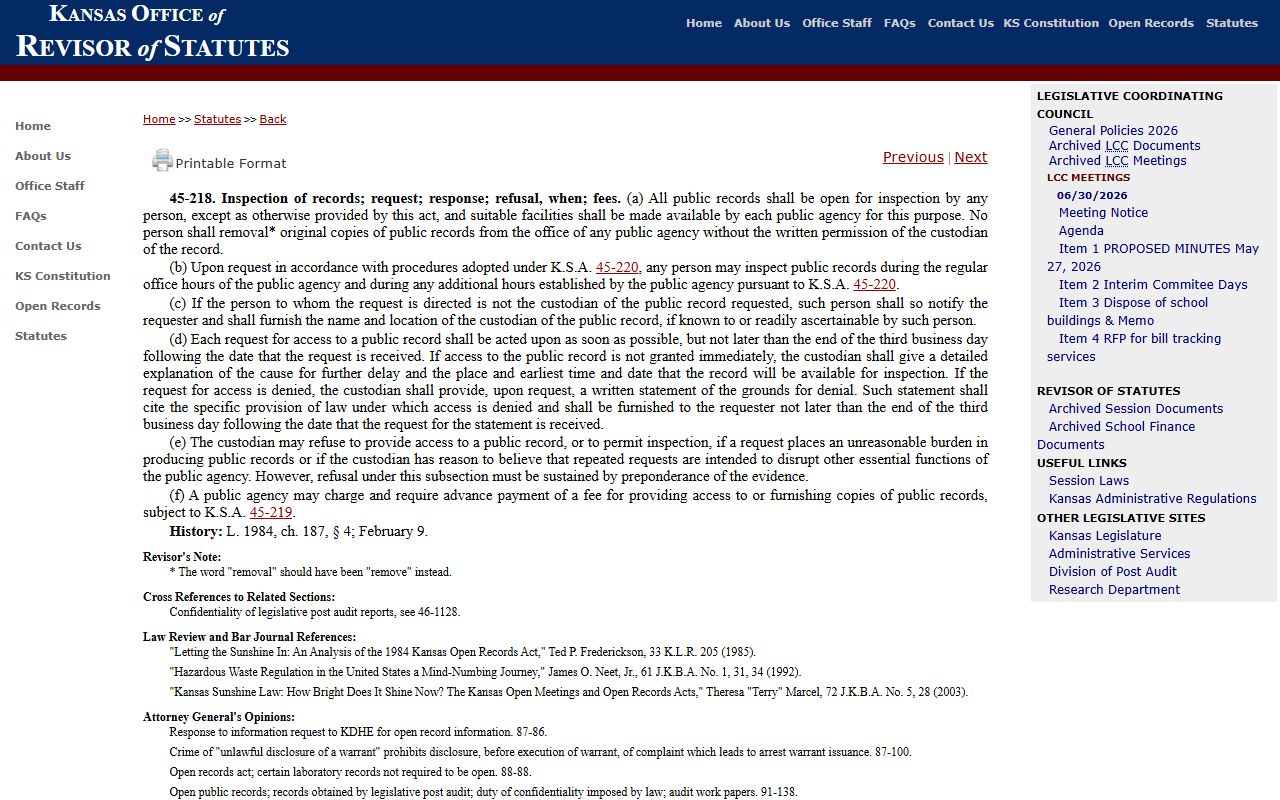
That inspection rule supports the request path, but it does not override court sealing, juvenile limits, or criminal-investigation restrictions.
Charges vs. Convictions
Arrest records and filed court charges are not proof of conviction. A person can be arrested and never charged. A person can be charged and later have the count dismissed, amended, reduced, diverted, or resolved by acquittal. A conviction exists only after the court records a guilty plea, verdict, or other finding of guilt.
| Charge | Conviction | |
|---|---|---|
| Stage | Accusation after arrest or investigation. | Final court result after plea or trial. |
| Source | Charging document, docket, sheriff notes, or citation. | Disposition, judgment, and sentencing entry. |
| Meaning | The State alleges an offense. | The court records guilt on a count. |
| Risk When Misread | A dismissed or amended charge may be treated as final when it is not. | A conviction may be missed if only the arrest record is reviewed. |
Sealed vs. Expunged Records
Sealed and expunged records both limit public access, but the terms mean different things. A sealed Hodgeman County charge record is hidden from ordinary public view by law or court order. An expunged arrest, diversion, or conviction record is limited through a Kansas statutory process after eligibility, waiting periods, and court review.
| Sealed | Expunged | |
|---|---|---|
| Visibility | Not visible to ordinary public searchers. | Public access is limited after the court grants relief. |
| Law Enforcement | May remain available to authorized officials. | May remain available to agencies or purposes named in Kansas law. |
| Eligibility | Depends on court order, statute, or protected case type. | Depends on K.S.A. 21-6614, K.S.A. 22-2410, or juvenile expungement law. |
K.S.A. 45-221 lists Kansas records that agencies are not required to disclose.
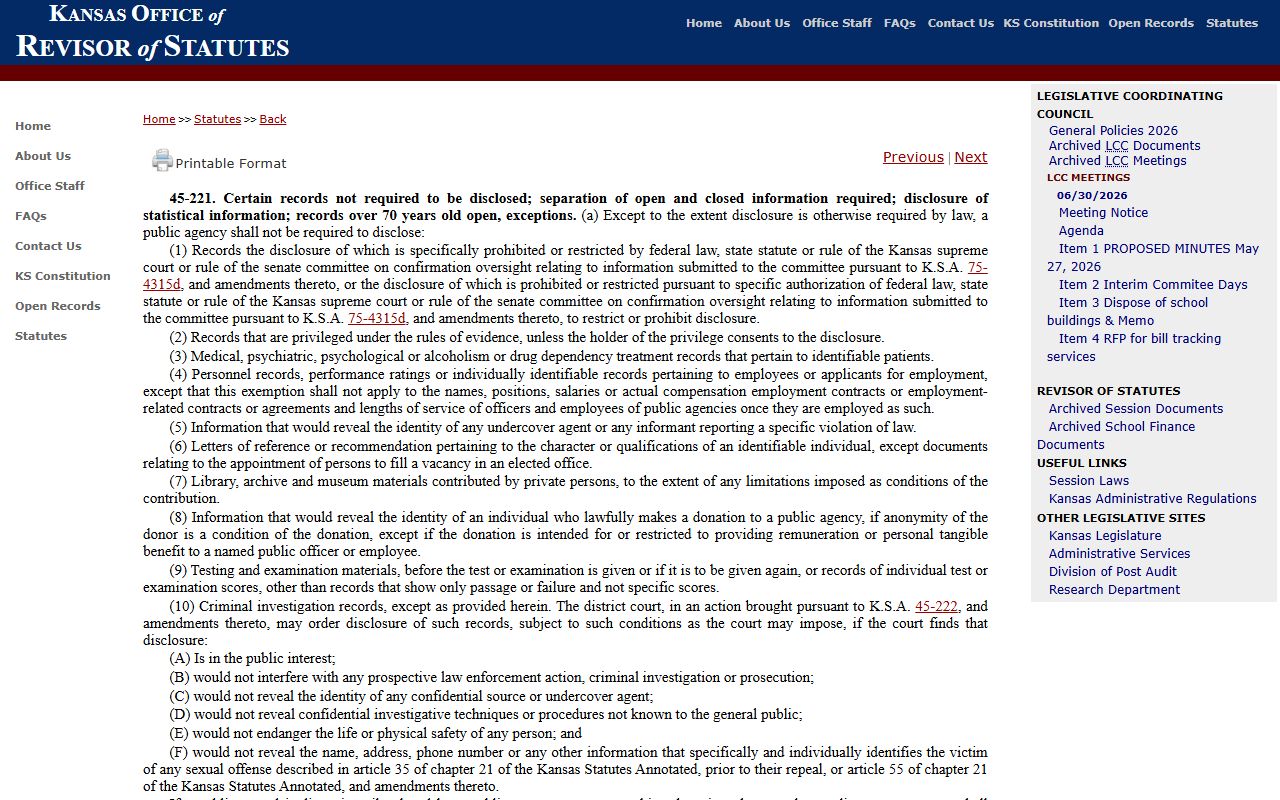
That statute is relevant when an arrest or charge record includes investigative, juvenile, victim, medical, or other protected information.
Charge Codes and Severity Levels
Kansas court charges often include a statute citation, offense description, count number, offense date, and severity level or class. Felonies are more serious offenses and may carry Kansas sentencing-grid consequences. Misdemeanors are lower-level crimes. Infractions and traffic offenses can appear in citation-based records. One arrest can produce several counts, and each count can end differently.
For Hodgeman County arrest records, the first charge label may come from the arresting agency or booking paperwork. The court charge code should be checked against the prosecutor-filed complaint or information. If a charge is amended, the original and amended charge may both appear in the docket. Always read the final disposition before treating an arrest charge as the final court result.
K.S.A. 45-215 establishes the Kansas Open Records Act title and public-record access framework.
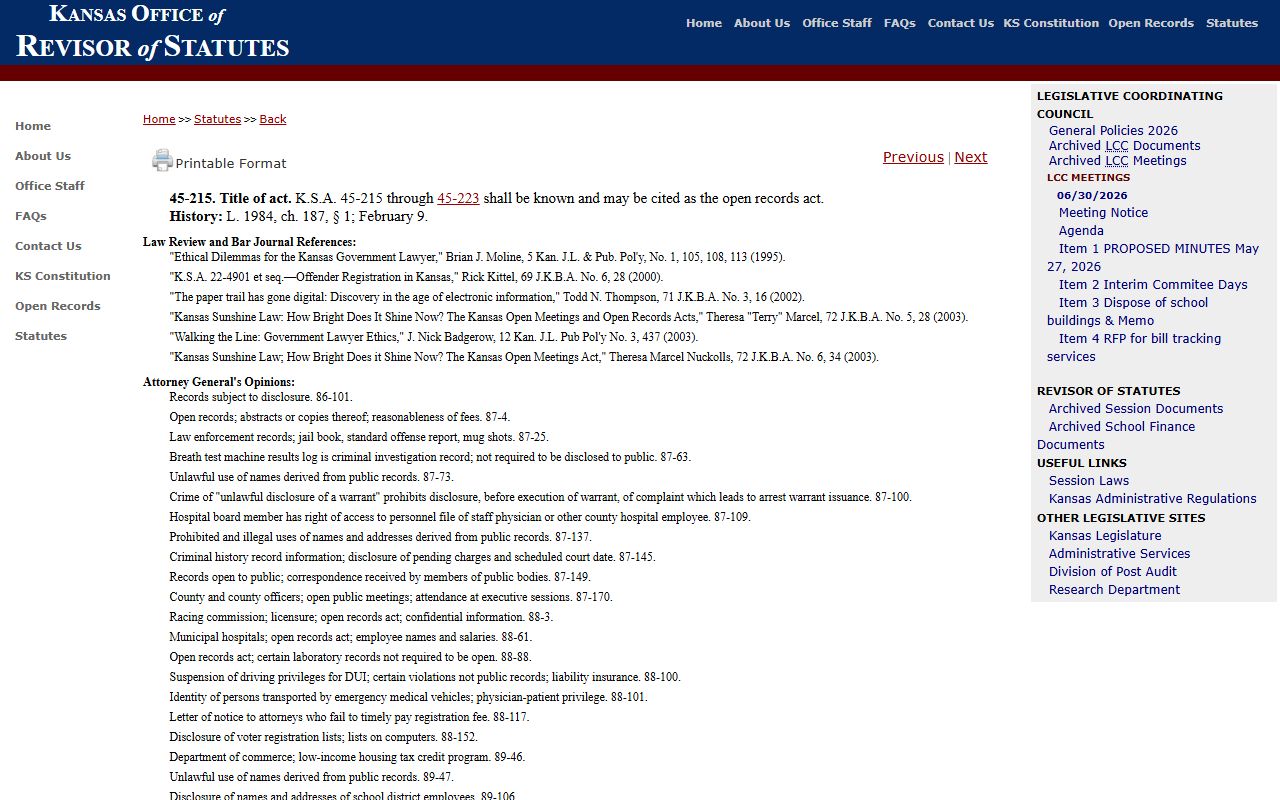
The open-records framework supports access requests, while court rules and criminal statutes decide what charge details may be shown or withheld.
Statewide Criminal History Lookups
The Kansas Bureau of Investigation criminal history record check is the statewide central repository channel. Kansas statutes define criminal history record information and establish the KBI central repository, but that report is not the same as the Hodgeman County District Court case file. A KBI result may summarize arrest or disposition data, while the court record contains the docket, filings, pleas, orders, and sentencing entries.
K.S.A. 45-219 allows public agencies to charge inspection or copy costs.
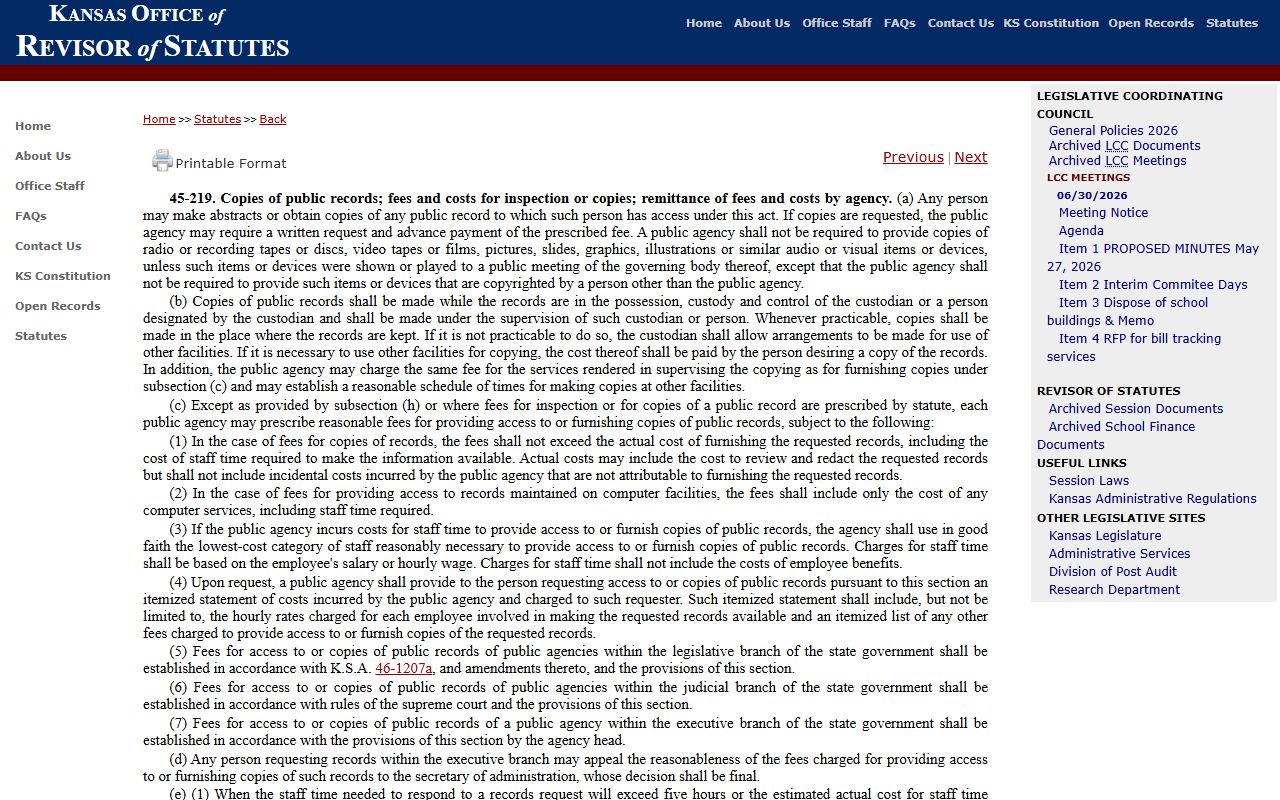
For Hodgeman County charge records, that fee rule matters when a requester moves from online lookup to clerk, sheriff, or agency copies.
Background Check Considerations
Arrest records and court charges are easy to misread in background contexts. A booking note may not be a filed charge. A filed charge may not be a conviction. A dismissed charge may remain visible until the record is sealed, expunged, or otherwise restricted by law. Regulated employment, housing, credit, and insurance decisions require compliant screening practices rather than casual lookup.
Important: Verify arrest and charge data with the sheriff, court clerk, or official state source before relying on it.
Kansas BIDS provides statewide indigent defense services for eligible adult defendants.

BIDS is relevant to charges after arrest because appointed counsel is handled through the court process, not by a public web search.
Restricted Hodgeman County Charge Records
Some Hodgeman County arrest records and charge records are restricted. Juvenile records have special disclosure rules. Sealed and expunged records should not appear in ordinary public search results. Active investigative material, unexecuted warrants, confidential victim details, minor identifiers, medical data, protected addresses, and financial identifiers may be withheld or redacted under Kansas law and court rules.
The best access chain is practical: call the sheriff for current arrest or custody questions, search CaseSearch for filed court charges, ask the Clerk of the District Court for documents, and use KBI only for statewide criminal history. If a charge record is missing, it may be unfiled, restricted, sealed, not yet indexed, or outside the Hodgeman County District Court system.
Kansas BIDS contact information identifies the statewide office for indigent defense administration.

That contact information is background for defense services after charges are filed, while local case scheduling remains with the Hodgeman County District Court.